
A thermal camera does not see water, wires or mould. It sees temperature — and temperature, read properly, confesses to almost everything else.
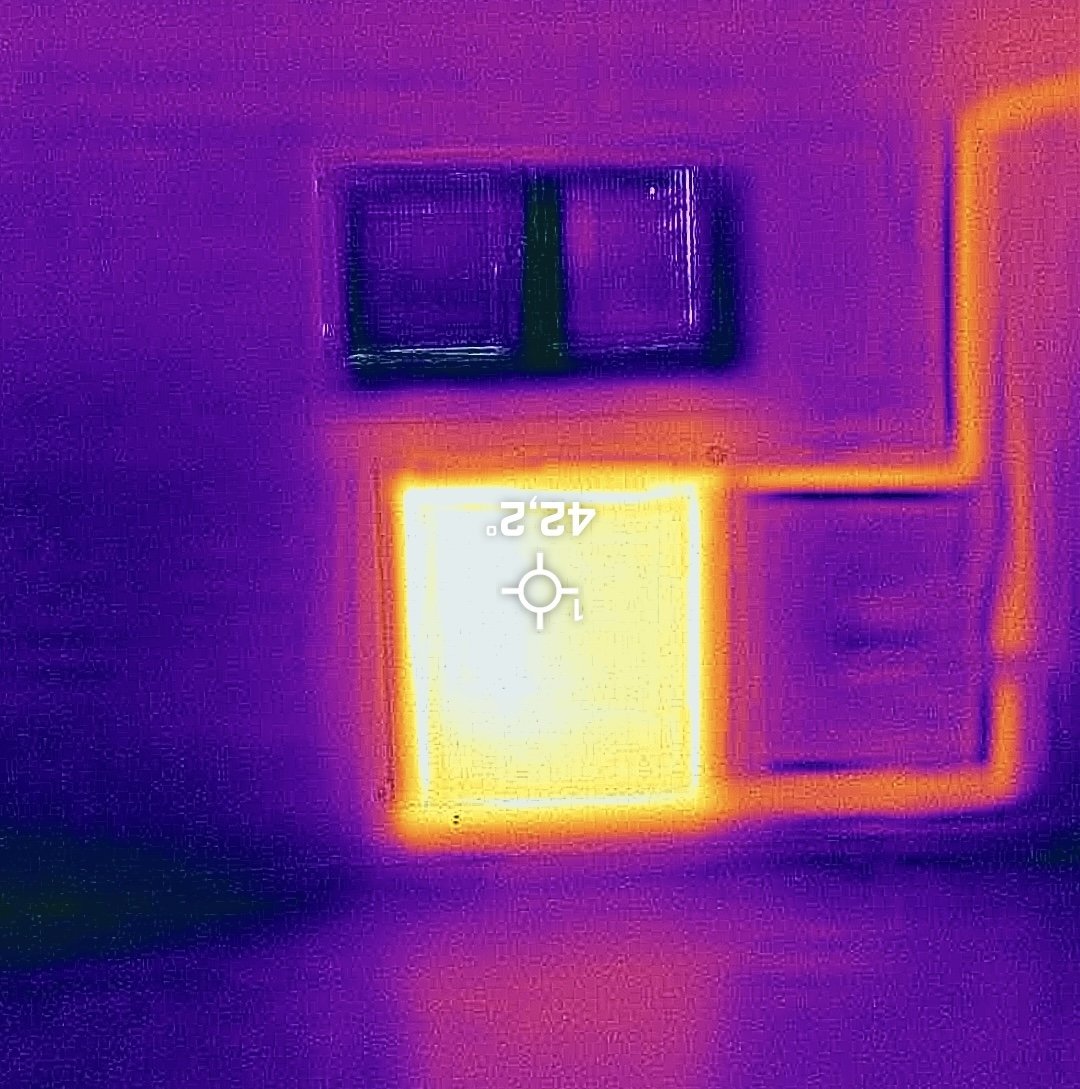
Every surface in a building radiates heat, and the pattern of that radiation is a map of what is happening behind the finish. Pipes announce themselves as warm lines. Missing insulation shows as cold fields. Air leaking around a window frame draws a sharp gradient. And moisture — the thing buyers fear most — betrays itself through evaporative cooling: a damp patch runs measurably cooler than the dry wall around it.
What we look for
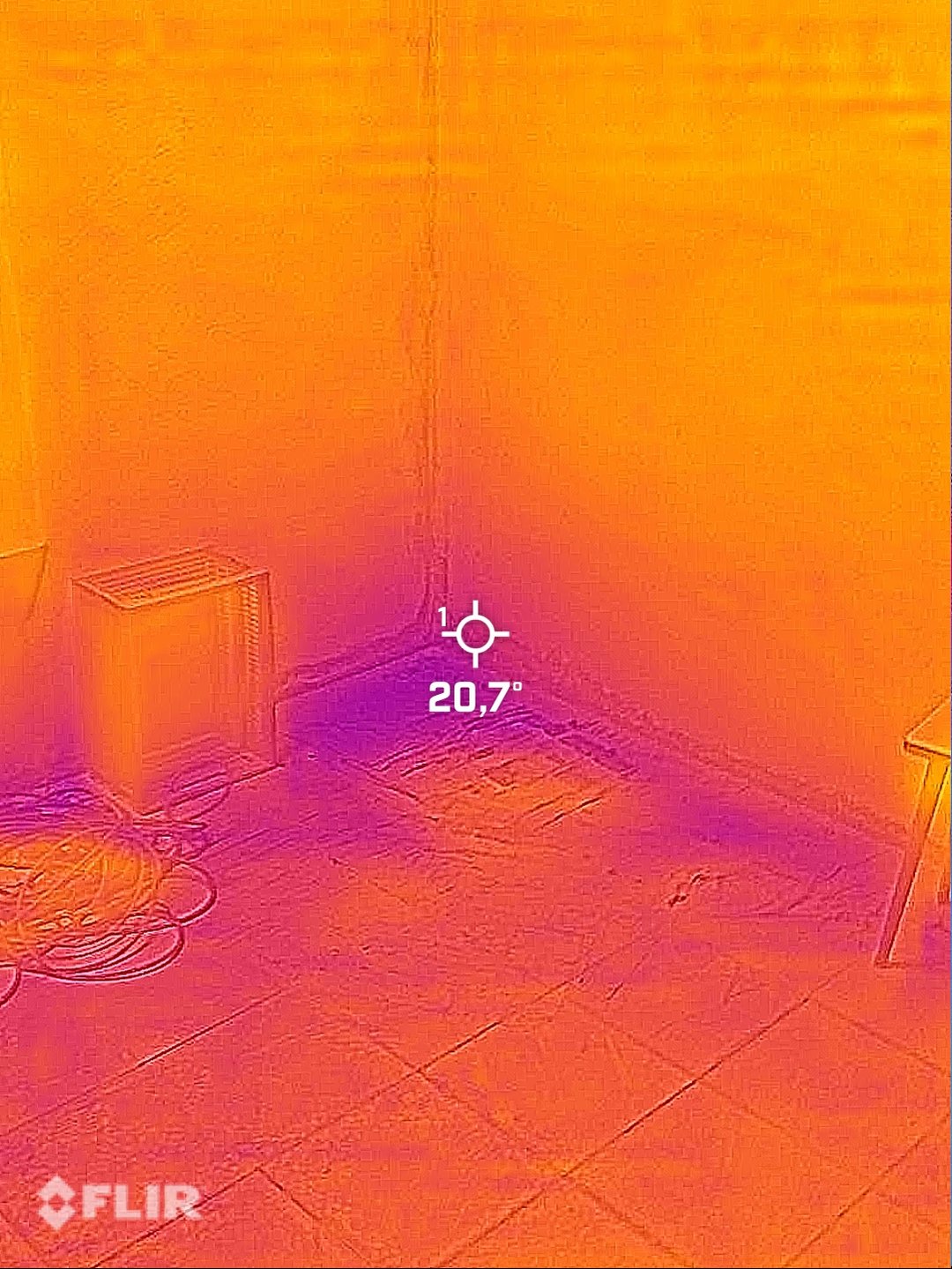
On an inspection, the camera earns its place four ways: thermal bridges — cold paths through the envelope where condensation will eventually form; insulation gaps — renovated walls that were never insulated behind the new plasterboard; pipe and heating runs — where they go, whether they leak, whether the underfloor heating actually covers the floor; and air leakage — the draughts around frames and doors that show up on your heating bill long before you feel them.
The honest limits
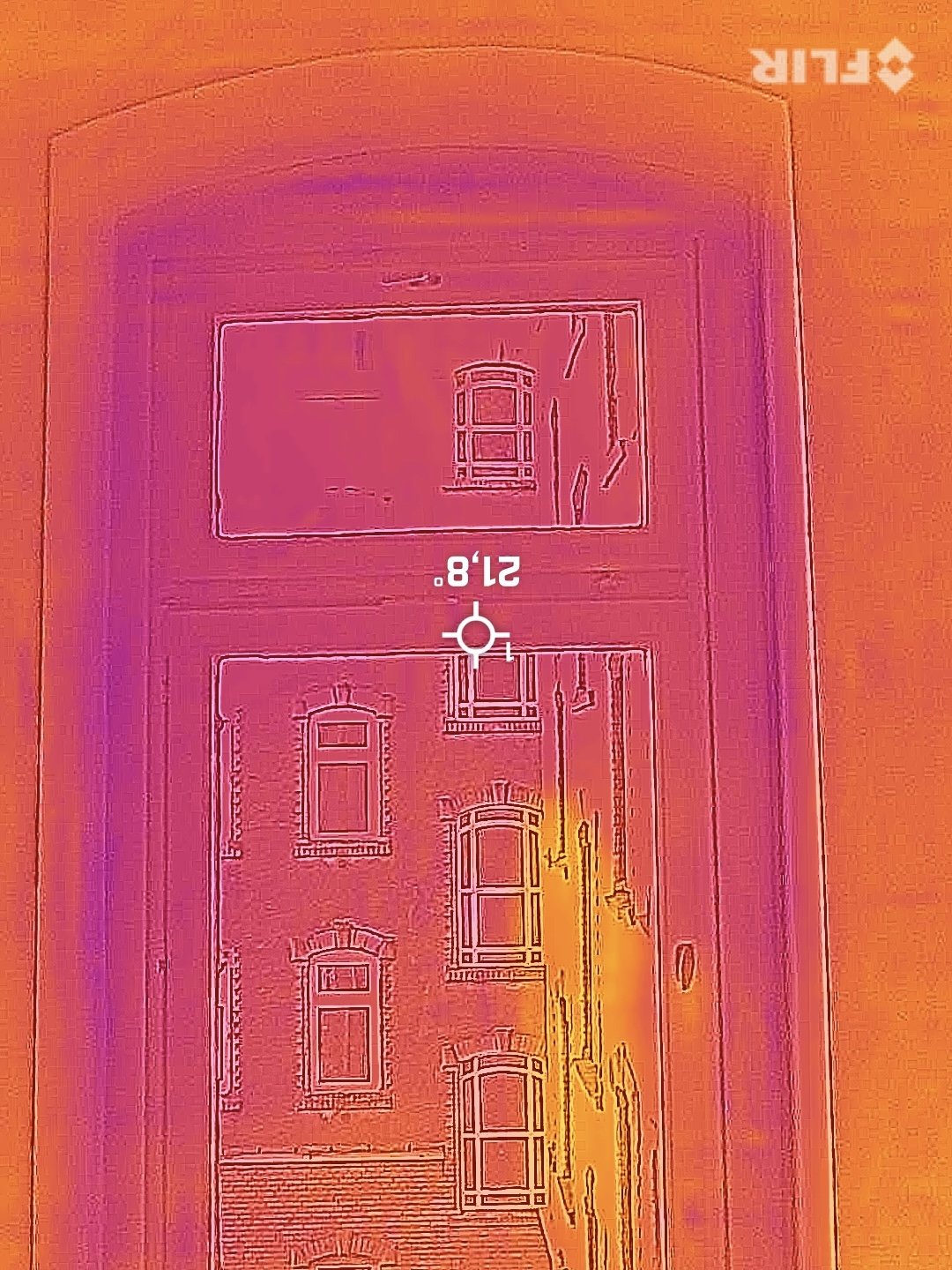
Here is what a thermal camera cannot do, and what anyone selling you certainty from colours alone is skipping: it measures surface temperature only. A cool patch might be moisture — or a cold-water pipe, a draught, or simply a thick wall. The image raises the question; it never answers it alone.
That is why every anomaly on our inspections gets a second instrument: capacitive moisture mapping across the suspect area, pin-probe readings at depth where the surface allows it, and reference readings on a known-dry wall of the same construction. Only when the instruments agree does an observation become a finding in your report — with the numbers printed next to it.
The rest of the kit
- Capacitive moisture meter — non-destructive moisture mapping through paint, plaster and tile.
- Pin-probe meter — moisture content at depth, in percent, where precision matters.
- Infrared spot thermometer — fast surface readings for dew-point calculations.
- Hygrometer — air humidity and temperature, the other half of every condensation diagnosis.
- Endoscope — a look inside cavities, behind bath panels and under floors, through openings millimetres wide.
- Digital level — slopes in floors, sills and trays, in degrees.
- Laser measure — independent floor-area verification.
None of it is exotic. What matters is the discipline: every finding measured, every measurement recorded, every number in the report where your negotiation can use it.